Home
    
Ask anyone who has successfully lost a significant amount of weight and they'll describe the same experience: the first 20–30 pounds came off with relative consistency, and then progress slowed, stalled, and eventually required far more effort for far less return. This is not a perception. It is a predictable biological phenomenon with specific mechanisms — and understanding them is what allows the last phase of fat loss to be navigated intelligently rather than abandoned in frustration.
2026/08/05 Report

ADVERTISEMENT

Why the Last 10 Pounds Are Always the Hardest (The Biology of Stubborn Fat)

The first mechanism is metabolic adaptation compounding with reduced body weight. As body weight decreases, maintenance caloric requirements decrease correspondingly. The caloric deficit that produced consistent loss at a higher weight becomes a smaller deficit at a lower weight, slowing loss rate proportionally.


ADVERTISEMENT


Simultaneously, adaptive thermogenesis — the additional suppression of metabolic rate beyond what weight loss alone predicts — has been accumulating throughout the diet. By the time someone is approaching their goal weight, adaptive thermogenesis may have reduced their effective metabolic rate by 15–25% beyond calculated predictions.

The article is not finished. Click on the next page to continue.

ADVERTISEMENT

The article is not finished. Click on the next page to continue.

Next page
Fitness trends come and go. Protocols are invented, marketed, exhausted, and replaced. But beneath the constantly changing surface of fitness culture, a small number of principles have been consistently supported across decades of research and have never been meaningfully contradicted. These eight are the bedrock — the training truths that were valid in 1975, are valid now, and will remain valid regardless of what the next fitness trend claims.
2026/08/05
You've had the experience: a meal that leaves you slumped at your desk, fighting to stay alert, wondering whether you can get through the afternoon without a nap. The relationship between what you eat and how you feel two hours later is direct and predictable — yet most people never consciously connect the specific foods to the specific energy consequences that follow. Here's what the most common energy-draining foods are actually doing to your physiology.
2026/08/05
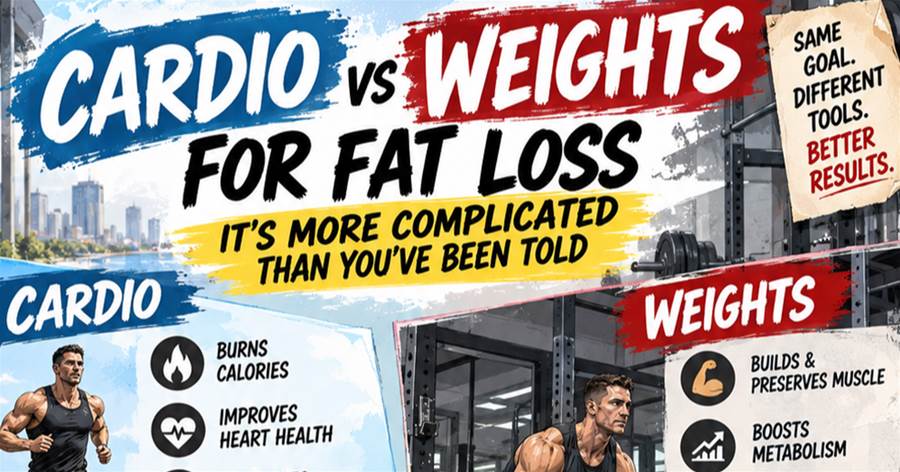
Most people who want to lose fat think about cardio first. Running, cycling, rowing — the activities that feel like they're burning fat while they're being performed. Resistance training is considered a separate goal, relevant only if building muscle is on the agenda. This division is one of the costliest misconceptions in fat loss strategy, and it is responsible for an enormous amount of wasted effort and disappointing results. Here's why lifting weights is the most effective fat loss tool available, even if gaining muscle has never crossed your mind.
2026/08/05
Osteoporosis is widely considered a women's disease. It is not. One in four men over 50 will suffer an osteoporosis-related fracture in their lifetime — and male osteoporotic fractures carry a higher mortality rate than female ones. The reason men are disproportionately affected by outcomes is simple: they are diagnosed later, treated less aggressively, and warned less frequently. Here are the signs your bone density is declining right now — before a fracture forces the conversation.
2026/07/28
Collagen is the most abundant protein in the human body — the structural scaffold of skin, joints, tendons, ligaments, and bone. After 25, the body produces approximately 1% less collagen per year. By 40, the visible consequences are undeniable: skin loses firmness, joints become less resilient, and recovery from physical stress slows. The good news is that dietary collagen — consumed consistently and in adequate amounts — produces measurable reversal of these changes. Here's what the research shows.
2026/07/28
The morning outdoor habit is simultaneously one of the oldest human behaviors and one of the most abandoned in modern life. The majority of men now spend their mornings in artificial light, indoors, moving directly from bedroom to screen to commute without a single minute of natural outdoor exposure. The physiological consequences of this shift are now well-documented — and the benefits of reversing it are measurable within days.
2026/07/28
Your liver performs over 500 functions daily. It filters every substance you consume, produces bile for digestion, regulates blood sugar, manufactures proteins, and detoxifies metabolic waste. It is also one of the most resilient organs in the body — capable of regenerating from significant damage when given the right conditions. Here's exactly what to feed it and what to remove.
2026/07/28
Most morning routines are aesthetics — cold plunges for Instagram, journaling for productivity influencers, green smoothies for virtue signaling. Here is a morning routine built entirely on endocrinology: the specific sequence of behaviors that, in the order described, produces the optimal hormonal environment for testosterone, cortisol regulation, cognitive performance, and metabolic function for the hours that follow.
2026/07/28
Insulin resistance is one of the most common and most consequential metabolic conditions in men — and one of the least diagnosed until it has progressed to type 2 diabetes. It is the underlying driver of belly fat accumulation, energy crashes, brain fog, high blood pressure, high triglycerides, low testosterone, and accelerated aging. Most men who have it feel its effects every day without connecting them to a single root cause. Here's how to recognize it.
2026/07/28
The gut microbiome contains approximately 100 trillion microorganisms — outnumbering human cells by 10 to 1. These organisms regulate your immune system, produce neurotransmitters, influence hormone levels, determine how many calories you absorb from food, and communicate directly with your brain via the vagus nerve. Fermented foods are the most direct, most bioavailable, and most studied method of improving this ecosystem. Here's what 30 days of daily consumption produces.
2026/07/28
Heart rate variability (HRV) is the most sensitive health metric most men have never heard of. It is not your heart rate — it is the variation in time between consecutive heartbeats, measured in milliseconds. High HRV reflects a nervous system that is resilient, recovered, and capable of adapting to stress. Low HRV predicts cardiovascular disease, diabetes, depression, and all-cause mortality better than almost any other single biomarker. Here's what low HRV looks like in daily life — and what to do about it.
2026/07/28
What you do in the 90 minutes before sleep determines the quality of everything that follows — the depth of your deep sleep, the amount of growth hormone secreted, the efficiency of testosterone production, and the completeness of cellular repair. Most men have unknowingly built pre-bed routines that systematically undermine every one of these processes. Here's what to stop, why, and what to replace it with.
2026/07/28
Processed meat — bacon, sausages, hot dogs, deli meats, ham, pepperoni, salami — is one of only a handful of foods classified as a Group 1 carcinogen by the World Health Organization. This classification — the same category as tobacco smoking and asbestos — means the evidence linking it to cancer is sufficient to be certain, not merely suggestive. Beyond cancer, processed meat's effects on cardiovascular health, gut microbiome, and inflammation are well-documented and significant. Here's what 30 days without it actually does to your body.
2026/07/28
You're eating clean. You're training hard. But if certain foods are quietly elevating your cortisol throughout the day, your body is fighting you at the hormonal level — holding onto fat, breaking down muscle, and disrupting sleep, all while you wonder why your effort isn't producing results. These eight foods are the most common and least recognized cortisol triggers in modern diets.
2026/07/27
Training frequency is one of the most debated variables in fitness. Once a week per muscle group? Three times? Every day? The answer used to be largely theoretical, based on extrapolations from recovery biology. Now a substantial body of direct research has produced recommendations specific enough to be immediately actionable — and they'll probably surprise you.
2026/07/27
Omega-3 fatty acids are universally recommended for heart health. What almost nobody mentions is that their effect on muscle recovery, inflammation management, and protein synthesis is equally compelling — and potentially more immediately relevant for men who train regularly. If you're not deliberately including omega-3s in your diet, your recovery is slower, your inflammation is higher, and your muscle-building environment is more hostile than it needs to be.
2026/07/27
Walking is the exercise recommendation that serious fitness enthusiasts dismiss as too basic to matter. It's what you do when you can't do "real" exercise. Except the research on walking for fat loss, metabolic health, and long-term body composition tells a different story — one that puts walking in a category that most higher-intensity alternatives can't match for specific and important reasons.
2026/07/27
You know the type. The man who stays lean without appearing to diet obsessively, who doesn't track every calorie, who somehow maintains a physique that most people achieve only at the peak of a strict cut. These men are not genetically superior in most cases. They've simply built a specific set of habits that create the conditions for low body fat as a default — not a temporary achievement. Here's what those habits look like.
2026/07/27
If you've ever had a doctor tell you that your BMI puts you in the overweight or obese category while you train consistently and feel healthy, you've encountered one of medicine's most persistent measurement failures. BMI — Body Mass Index — is a 19th-century formula designed to analyze population-level weight trends that has been misapplied as an individual health diagnostic for decades. Here's why it systematically misleads physically active men, and what to measure instead.
2026/07/27
You're showing up and putting in the work. But something is off — you're weaker than you should be, recovery is slow, and progress has stalled. Before blaming programming, sleep, or stress, consider that nutrition errors are the most common and most underidentified cause of gym underperformance. These nine dietary signs are the ones most worth examining first.
2026/07/27